Best Raw Honey in Pakistan 2026: Sidr vs Robinia vs Multifloral Compared
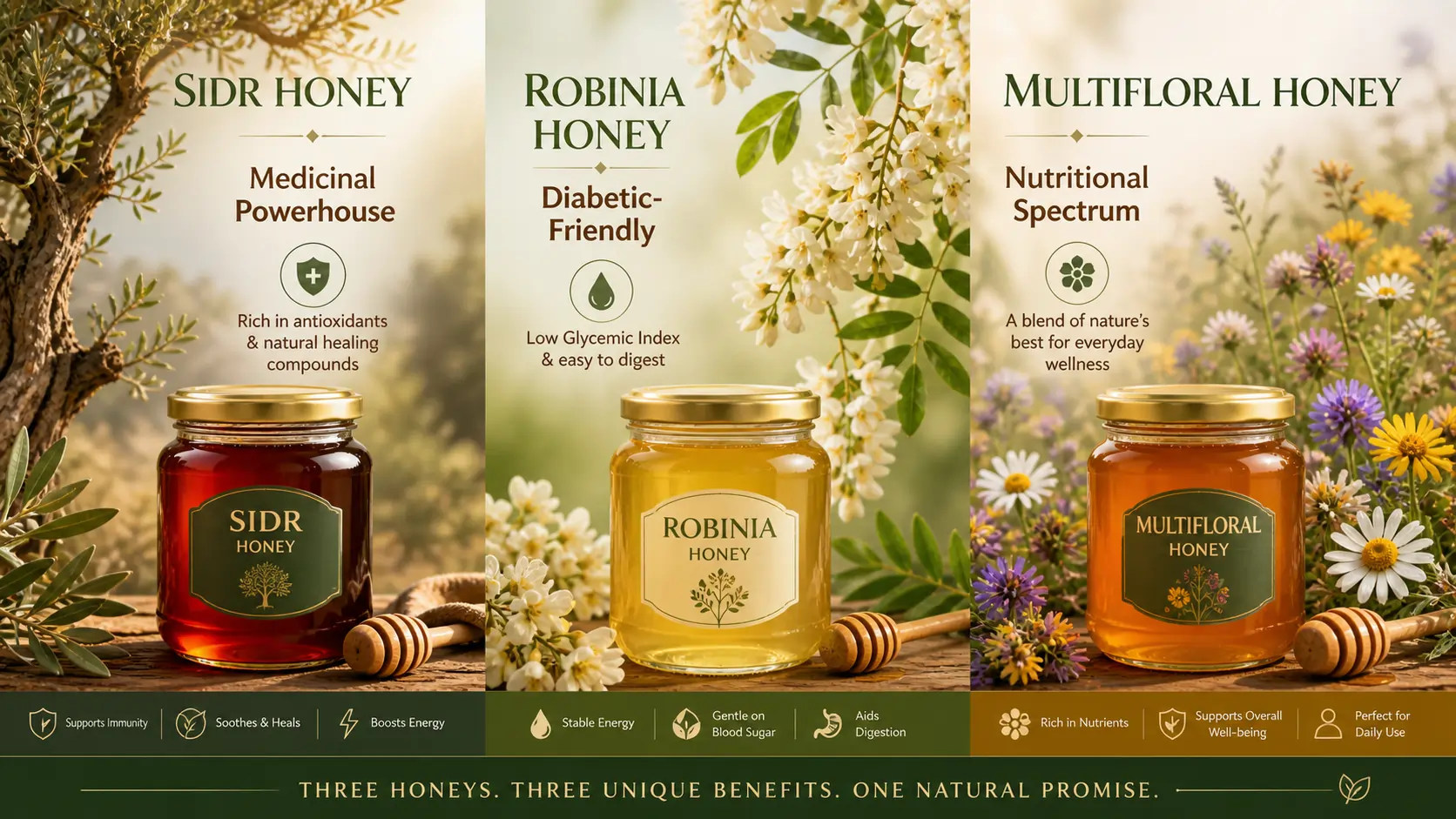
Choosing the best raw honey depends on your specific needs. Sidr honey offers the highest antibacterial potency (MGO 400+) for wound healing and immunity. Robinia honey has the lowest glycemic index (52) making it safest for diabetics. Multifloral honey provides the broadest nutrient spectrum from diverse flower sources.
All three are unpasteurized, enzyme-rich, and harvested from Pakistan’s northern forests. This complete guide helps you choose the right honey for health, taste, and therapeutic benefits.
Why Raw Honey Matters: Pasteurized vs Unpasteurized
Raw honey is never heated above 40°C, preserving natural enzymes (diastase, invertase), antioxidants, pollen, and antibacterial compounds. Pasteurized honey (commercially heated to 70–80°C) loses these therapeutic properties, becoming primarily a sugar syrup.
Pakistan’s forest honey from Margalla Hills, Murree, and Swat Valley is naturally raw — extracted through gravity draining or light pressing, then strained without heat. This preserves the medicinal compounds that make honey a superfood rather than just a sweetener.
Sidr Honey vs Robinia vs Multifloral: Quick Comparison
| Feature | Sidr Honey | Robinia Honey | Multifloral Honey |
|---|---|---|---|
| Primary Flower Source | Sidr tree (Ziziphus) | Robinia tree (Black Locust) | Mixed wildflowers (15+ species) |
| Color | Dark amber to reddish-brown | Light golden to pale yellow | Medium amber |
| Taste | Rich, earthy, slightly bitter | Mild, delicate, floral | Balanced sweet, complex floral |
| Aroma | Intense woody, herbal | Light, subtle acacia-like | Varied floral bouquet |
| Texture | Thick, slow-flowing | Medium viscosity | Medium to thick |
| Crystallization Speed | Slow (6–12 months) | Very slow (12–18 months) | Medium (3–6 months) |
| Glycemic Index | 58 (medium) | 52 (low) | 60 (medium) |
| MGO Content | 400+ mg/kg (high antibacterial) | 100–200 mg/kg (moderate) | 150–300 mg/kg (moderate-high) |
| Best For | Wound healing, immunity, cough | Diabetics, daily sweetener, baking | General health, allergy relief, nutrition |
| Harvest Season | October–November (limited) | May–June (abundant) | April–August (variable) |
| Rarity | Rare (limited Sidr forests) | Moderate availability | Common (widespread sources) |
| Price Category | Premium | Mid-range | Affordable |
Sidr Honey: The Medicinal Powerhouse
What Makes Sidr Honey Special?
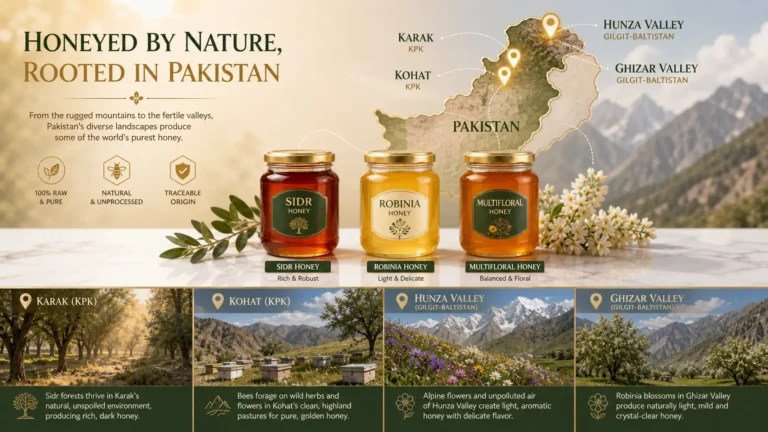
Sidr honey comes from the Sidr tree (Ziziphus mauritiana or Ziziphus spina-christi), also known as Ber or Jujube. These trees grow in Pakistan’s northern regions, particularly Margalla Hills and parts of Khyber Pakhtunkhwa. The Sidr tree has religious significance in Islamic tradition and produces one of the most medicinally potent honeys globally.
Therapeutic Properties
Antibacterial Potency (MGO 400+ mg/kg):
Sidr honey contains methylglyoxal (MGO) at levels comparable to New Zealand Manuka honey. MGO disrupts bacterial cell walls, making it effective against:
- Antibiotic-resistant bacteria (MRSA, E. coli)
- Wound infections (topical application)
- H. pylori bacteria (stomach ulcers)
Antioxidant Richness:
Phenolic compounds and flavonoids neutralize free radicals, reducing oxidative stress linked to chronic diseases.
Anti-Inflammatory Effects:
Reduces inflammation in respiratory tract (cough, sore throat) and digestive system (gastritis, IBS).
Health Benefits of Sidr Honey
- Wound healing: Apply topically to cuts, burns, surgical wounds — accelerates tissue repair
- Immunity boost: Daily 1 tablespoon strengthens immune response
- Digestive health: Soothes stomach ulcers, acid reflux, IBS symptoms
- Cough & cold relief: Coats throat, reduces irritation, suppresses cough reflex
- Energy source: Natural sugars (fructose 38%, glucose 31%) provide sustained energy
- Liver protection: Hepatoprotective compounds support liver detoxification
Best Uses for Sidr Honey
✅ Therapeutic: Wound dressing, infection prevention, immune support
✅ Respiratory: Cough syrup alternative, sore throat relief
✅ Digestive: Stomach ulcer treatment, gut health maintenance
✅ Not ideal for: Everyday sweetening (too expensive), baking (destroys medicinal compounds)
Taste & Texture Profile
Taste: Rich, full-bodied, earthy with slight bitterness and woody undertones. The complex flavor reflects the Sidr tree’s medicinal properties.
Texture: Thick and slow-flowing due to low moisture content (15–16%). Dense consistency indicates high quality.
Aroma: Intense herbal, slightly medicinal fragrance — distinctive and unmistakable.
Robinia Honey: The Diabetic-Friendly Choice
What Makes Robinia Honey Special?
Robinia honey (also called Acacia honey or Black Locust honey) comes from the Robinia pseudoacacia tree. These trees bloom abundantly in Pakistan’s northern forests during May–June, producing large quantities of light, mild honey. Robinia is prized for its low glycemic index and slow crystallization.
Glycemic Impact: Why It’s Best for Diabetics
Glycemic Index: 52 (Low)
Robinia honey has a lower GI than most honeys due to high fructose-to-glucose ratio (1.6:1). This means:
- Slower blood sugar absorption
- Less insulin spike
- More stable energy release
Diabetic-Safe Consumption:
Type 2 diabetics can consume 1 tablespoon (15g) daily under medical supervision. Monitor blood glucose 2 hours post-consumption. Always pair with protein or fat to slow absorption further.
Health Benefits of Robinia Honey
- Blood sugar management: Lower GI reduces glucose spikes vs other honeys
- Prebiotics: Supports gut bacteria growth, improves digestion
- Gentle on stomach: Mild flavor suitable for sensitive digestive systems
- Liver cleansing: Supports detoxification pathways
- Antioxidants: Moderate polyphenol content protects cells
- Skin health: Topical application hydrates, soothes irritation
Best Uses for Robinia Honey
✅ Daily sweetener: Tea, coffee, smoothies (heat-sensitive — add to warm, not hot beverages)
✅ Baking: Retains liquid form longer, ideal for recipes requiring pourable honey
✅ Diabetic diets: Lower GI makes it safer choice (still monitor intake)
✅ Children’s snacks: Mild taste appeals to kids (not for infants under 12 months)
✅ Beauty products: Face masks, hair treatments (moisturizing properties)
Taste & Texture Profile
Taste: Mild, delicate, subtly sweet with light floral notes. Least “honey-flavored” of the three — perfect for those who dislike strong honey taste.
Texture: Medium viscosity, pourable consistency. Stays liquid much longer than other honeys (12–18 months before crystallizing).
Aroma: Light, fresh, slightly reminiscent of acacia blossoms — barely noticeable.
Multifloral Honey: The Nutritional Powerhouse
What Makes Multifloral Honey Special?
Multifloral honey (also called wildflower honey or polyfloral honey) comes from bees foraging on 15+ different flower species in Pakistan’s diverse mountain ecosystems. Each batch varies slightly depending on which flowers were blooming during harvest, creating a unique flavor profile each season.
Biodiversity Advantage
Nutrient Spectrum:
The variety of flower sources means multifloral honey contains:
- Broader range of vitamins (B-complex, vitamin C traces)
- More diverse minerals (potassium, calcium, magnesium, iron)
- Multiple antioxidant types (from different plant families)
- Varied pollen profile (allergy-relief benefits)
Synergistic Compounds:
Different flowers contribute unique phytochemicals that work together, potentially offering combined health benefits no single-source honey provides.
Health Benefits of Multifloral Honey
- Allergy relief: Local pollen exposure builds immune tolerance (seasonal allergies)
- Broad-spectrum antioxidants: Protects against diverse oxidative stressors
- Immune support: Varied antimicrobial compounds from multiple plants
- Energy boost: Balanced fructose-glucose ratio (1.2:1) for sustained energy
- Skin health: Rich in enzymes and nutrients for topical application
- Digestive enzymes: Diastase and invertase aid carbohydrate digestion
- Anti-inflammatory: Multiple plant sources provide comprehensive inflammation reduction
Best Uses for Multifloral Honey
✅ Daily wellness: General health maintenance, immune support
✅ Allergy season: Local honey reduces seasonal allergy symptoms (consume 1 tbsp daily starting 6 weeks before season)
✅ Cooking: Balanced flavor works in savory and sweet dishes
✅ Nutritional supplement: Broadest micronutrient profile
✅ Budget-friendly: Best value for everyday use
✅ Gift/bulk purchase: Versatile enough for any recipient
Taste & Texture Profile
Taste: Balanced sweetness with complex floral notes. Each batch tastes slightly different depending on seasonal flower availability. Generally more “honey-flavored” than Robinia, less intense than Sidr.
Texture: Medium to thick consistency. Crystallizes within 3–6 months (normal and reversible).
Aroma: Varied floral bouquet — pleasant, inviting, recognizably “honey-like.”
Which Honey Should You Choose? Decision Framework
Choose SIDR HONEY if you need:
- ✅ Wound healing or infection treatment (topical use)
- ✅ Maximum antibacterial/antimicrobial potency
- ✅ Immune system boost during illness
- ✅ Cough and respiratory relief
- ✅ Digestive issues (ulcers, gastritis, IBS)
- ✅ Premium medicinal-grade honey
- ❌ NOT for: Daily sweetening (too expensive), baking (heat destroys properties)
Choose ROBINIA HONEY if you need:
- ✅ Diabetic-safe sweetener (lowest GI = 52)
- ✅ Mild flavor for picky eaters or children
- ✅ Baking/cooking (stays liquid, pourable)
- ✅ Daily tea/coffee sweetener (won’t overpower flavor)
- ✅ Long shelf life without crystallization
- ✅ Budget-conscious quality honey
- ❌ NOT for: Maximum therapeutic potency (lower MGO)
Choose MULTIFLORAL HONEY if you need:
- ✅ Seasonal allergy relief (local pollen exposure)
- ✅ Broadest nutrient spectrum
- ✅ General wellness and immune support
- ✅ Versatile honey for cooking + health
- ✅ Best value for everyday use
- ✅ Diverse antioxidant profile
- ❌ NOT for: Specific therapeutic needs (Sidr better), diabetic diets (Robinia better)
Storage Guidelines for Maximum Freshness
Optimal Storage Conditions (All Honey Types):
Temperature: 18–24°C (room temperature)
Container: Glass jar with airtight lid (avoid metal lids — honey’s acidity causes corrosion)
Location: Dark cupboard or pantry (light degrades antioxidants)
Avoid: Refrigeration (accelerates crystallization), heat sources, direct sunlight, moisture exposure
Shelf Life by Type:
| Honey Type | Liquid Phase | Crystallization Onset | Total Shelf Life |
|---|---|---|---|
| Sidr | 6–12 months | 6–12 months | Indefinite (never spoils) |
| Robinia | 12–18 months | 12–18+ months | Indefinite |
| Multifloral | 3–6 months | 3–6 months | Indefinite |
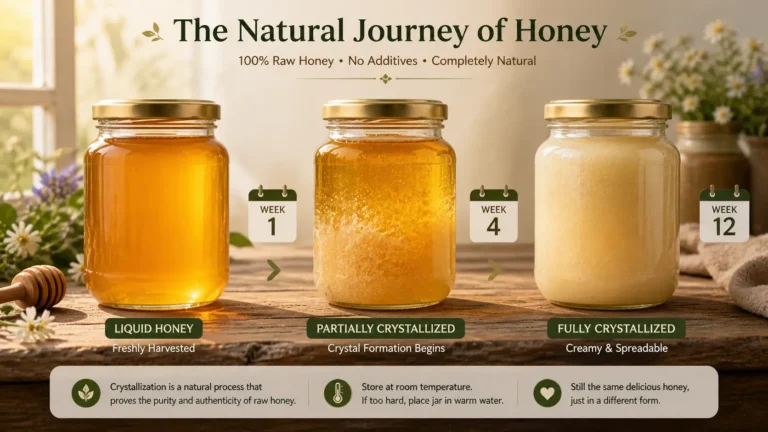
Note: Crystallization is natural and reversible. Honey never spoils due to low moisture (16–18%) and acidic pH (3.5–4.5) creating hostile environment for bacteria.
De-Crystallization Method:
- Fill bowl with warm water (40–45°C — not boiling)
- Place honey jar in water bath (lid off)
- Stir occasionally for 10–15 minutes
- Honey returns to liquid state
- Never microwave — destroys enzymes and antioxidants
Nutritional Comparison (Per 100g)
| Nutrient | Sidr Honey | Robinia Honey | Multifloral Honey |
|---|---|---|---|
| Calories | 304 kcal | 300 kcal | 304 kcal |
| Carbohydrates | 82g | 81g | 82g |
| Sugars | 76g (38% fructose, 31% glucose) | 78g (44% fructose, 27% glucose) | 77g (40% fructose, 33% glucose) |
| Protein | 0.3g | 0.3g | 0.4g |
| Moisture | 15% | 17% | 16% |
| Glycemic Index | 58 (medium) | 52 (low) | 60 (medium) |
| MGO (Antibacterial) | 400+ mg/kg | 100–200 mg/kg | 150–300 mg/kg |
| Antioxidants (TAC) | Very high | Moderate | High |
| Minerals | K, Ca, Mg, Fe, Zn | K, Ca, Mg | K, Ca, Mg, Fe, Cu |
| Enzymes | Diastase, invertase, glucose oxidase | Diastase, invertase | Diastase, invertase, catalase |
Safety Guidelines
✅ Safe For:
- Adults (daily consumption 1–2 tablespoons)
- Children 12+ months (1 teaspoon daily)
- Pregnant/nursing women (natural energy source, immune support)
- Diabetics (Robinia honey only, with blood glucose monitoring)
⚠️ Use With Caution:
- Type 1 diabetics: Consult endocrinologist before regular consumption (even Robinia)
- Weight management: 64 calories per tablespoon — track intake
- Fructose intolerance: Honey is 38–44% fructose — may cause digestive issues
❌ Avoid:
- Infants under 12 months: Risk of infant botulism (underdeveloped gut flora)
- Severe bee allergies: Pollen traces may trigger reactions (rare but serious)
Why Buy Forest Honey from Organic Point?
- ✅ 100% raw, unpasteurized: Never heated above 40°C, enzymes intact
- ✅ Single-origin verified: Each honey type from specific forest regions (Margalla Hills, Murree, Swat)
- ✅ No blending or dilution: Pure monofloral or multifloral honey, no mixing with cheap varieties
- ✅ Laboratory tested: Third-party verification for purity, moisture content, MGO levels
- ✅ Sustainable harvesting: Beekeeper partnerships support forest conservation
- ✅ Fresh seasonal batches: Harvested during optimal bloom periods for maximum potency
- ✅ Food Grade packaging: Food-grade jars preserve quality
- ✅ Nationwide delivery: Across Pakistan
- ✅ Transparent sourcing: Know exactly where your honey comes from
- ✅ No adulteration: Zero sugar syrup, corn syrup, or artificial additives
Frequently Asked Questions
Shop authentic Pakistani forest honey at Organic Point. Choose Sidr for therapeutic potency, Robinia for diabetic-friendly sweetness, or Multifloral for comprehensive nutrition. All raw, unpasteurized, lab-tested. Delivered fresh nationwide.