Why Organic Point Leads in Quality, Purity & Trust
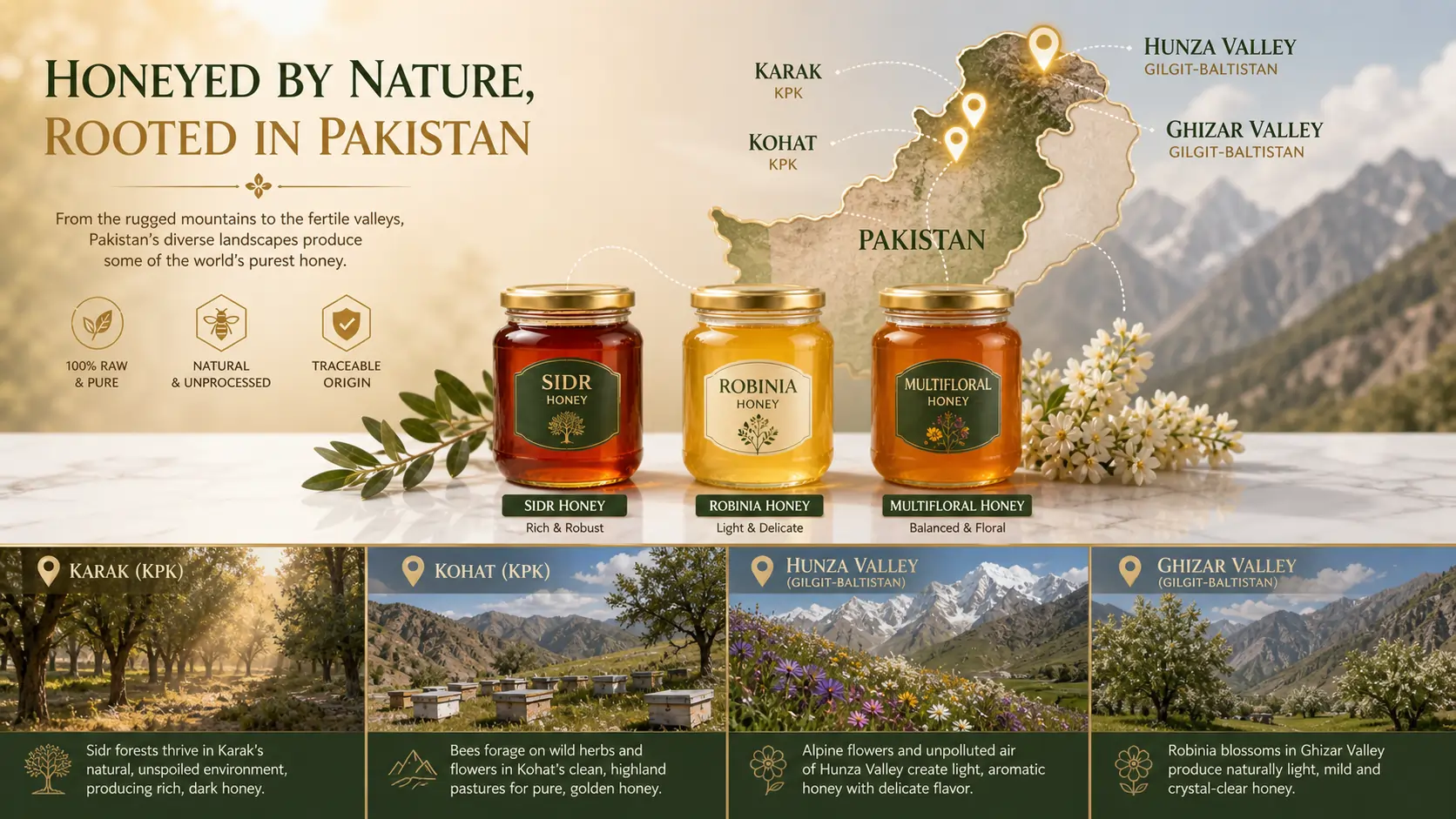
Finding authentic, pure honey in Pakistan is challenging. Most commercial brands heat-process honey (destroying enzymes), add sugar syrup (adulteration), or source from pesticide-treated farms. Organic Point solves this with 100% raw, cold-extracted forest honey from Pakistan’s untouched northern and mountainous regions (Karak, Kohat, Hunza Valley, Ghizar Valley). Our honey is never heated above 40°C, contains zero additives, and passes third-party lab testing for purity, moisture content (16-18%), and antibacterial potency.
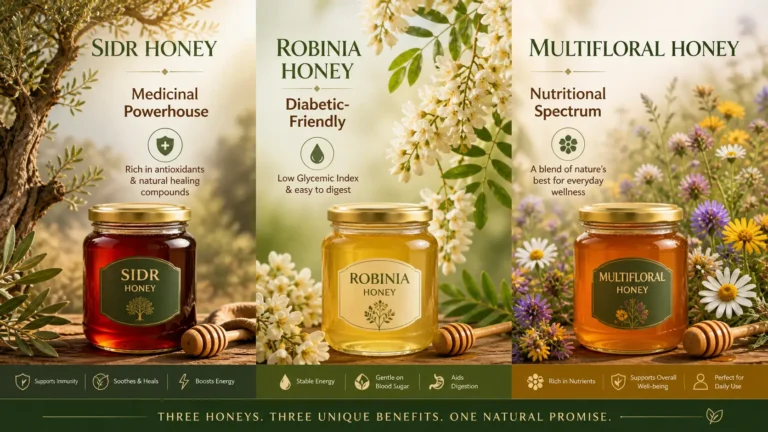
We offer three varieties: Sidr Honey (MGO 400+ for immunity), Robinia Honey (GI 52 for diabetics), and Multifloral Honey (15+ flower sources for broad nutrition). Every jar traces back to specific forest regions, verified by partnered beekeepers who practice chemical-free, sustainable harvesting.
Why Pakistan’s Forest Honey is Superior to Farm Honey?
Forest Honey vs Commercial Farm Honey Comparison
Factor | Organic Point Forest Honey | Commercial Farm Honey |
|---|---|---|
Source | Wild forests (Karak, Kohat, Hunza, Ghizar) | Cultivated farms with mono-crops |
Bee Diet | 15+ native wildflower species | 1-3 farmed crops (often pesticide-treated) |
Processing | Cold-extracted (never above 40°C) | Heat-processed (70-80°C) to delay crystallization |
Additives | ZERO — pure honey only | Often mixed with sugar syrup, corn syrup |
Nutrient Retention | 100% enzymes, vitamins, minerals intact | 60-70% nutrients destroyed by heat |
Antibacterial (MGO) | 150-400+ mg/kg (natural variation) | 50-100 mg/kg (heat degrades MGO) |
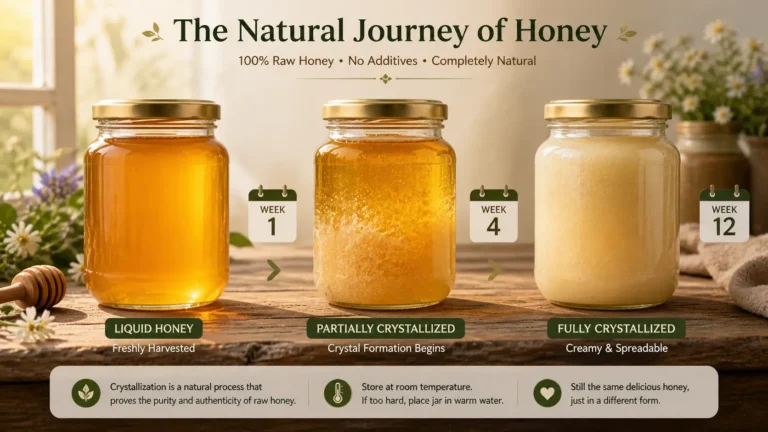
Crystallization | Natural (3-18 months depending on type) | Prevented by heating (stays liquid artificially) |
Pesticide Risk | Zero (bees forage in chemical-free zones) | High (farm crops sprayed with pesticides) |
Flavor Profile | Complex, floral, unique per variety | Generic, uniform, mild |
Price | Premium (reflects quality, sourcing effort) | Budget (mass-produced) |
Lab Testing | Third-party verified purity | Often untested or self-certified |
Our Forest Honey Sourcing: From Hive to Your Home
Step 1: Partnered Beekeepers in Chemical-Free Zones
We work with 5+ trusted beekeepers across Pakistan’s pristine forest regions:
Karak (Khyber Pakhtunkhwa):
- Elevation: 400-800 meters
- Flora: Sidr (Ber/Jujube) trees, wild acacia, indigenous shrubs, seasonal wildflowers
- Harvest season: October-November (Sidr bloom), April-June (acacia and wildflowers)
- Why here: Protected forest reserves with minimal human interference, zero pesticide use, ideal climate for Sidr tree proliferation
Kohat (Khyber Pakhtunkhwa):
- Elevation: 500-1,200 meters
- Flora: Mixed forest vegetation including Sidr, wild acacia, native herbs, mountain flora
- Harvest season: September-November (Sidr peak), May-July (multifloral bloom)
- Why here: Rugged terrain limits agricultural development, preserving natural ecosystem; traditional beekeeping heritage spanning generations
Hunza Valley (Gilgit-Baltistan):
- Elevation: 2,000-3,000 meters
- Flora: Alpine wildflowers (20+ species), Robinia (Black Locust), wild apricot blossoms, mountain herbs
- Harvest season: June-August (peak alpine wildflower season), May-June (Robinia bloom)
- Why here: High-altitude pristine environment, Himalayan biodiversity, crystal-clear glacial water sources nourish flora
Ghizar Valley (Gilgit-Baltistan):
- Elevation: 1,800-2,800 meters
- Flora: Diverse alpine meadows, wild roses, native grasses, Robinia trees, mountain wildflowers
- Harvest season: June-August (multifloral peak), May-July (Robinia)
- Why here: Remote valley with zero industrial activity, untouched by modern agriculture, traditional organic beekeeping practices preserved for centuries
Step 2: Traditional Extraction (Cold-Pressed Method)
Harvest process:
- Timing: Beekeepers wait until honeycomb is 80%+ capped (indicates honey moisture below 18%)
- Extraction: Frames removed carefully (minimal bee disturbance)
- Uncapping: Wax caps removed with heated knife (honey never touches heat)
- Centrifugal extraction: Honey spun out at room temperature (20-25°C)
- Gravity filtering: Single-pass through stainless steel mesh (removes wax, debris)
- Settling: 24-48 hours in food-grade containers (air bubbles rise, impurities settle)
Temperature control: Honey never exceeds 40°C throughout process (preserves diastase, invertase enzymes).
Step 3: Lab Testing & Quality Verification
Every batch tested for:
Test Parameter | Organic Point Standard | Industry Standard |
|---|---|---|
Moisture Content | 16-18% (natural preservation) | <20% (legal limit) |
HMF (Hydroxymethylfurfural) | <10 mg/kg (indicates no heat damage) | <40 mg/kg (legal limit) |
Diastase Activity | >12 DN (enzyme potency) | >8 DN (legal limit) |
Sugar Adulteration | 0% (pure honey) | Often 10-30% undisclosed |
Pesticide Residue | Zero detected | Often trace amounts |
Antibacterial (MGO) | 150-400+ mg/kg (varies by type) | Not tested by most brands |
Third-party certification: We use Pakistan Council of Scientific & Industrial Research (PCSIR) labs for independent verification.
Step 4: Hygienic Packaging
- Containers: Food-grade glass jars (plastic leaches chemicals into honey over time)
- Sealing: Tamper-evident caps with inner seal
- Labeling: Batch number, harvest date, forest region, MGO level (for Sidr)
- Storage: Climate-controlled warehouse (18-25°C) until shipment
Our Three Signature Forest Honey Varieties
1. Sidr Honey — The Medicinal Powerhouse
Source: Sidr trees (Ziziphus mauritiana) in Karak and Kohat forest reserves
Harvest: September-November (limited 8-10 week bloom period)
Color: Dark amber to reddish-brown
Taste: Rich, earthy, slightly bitter undertones
MGO Content: 400+ mg/kg (antibacterial comparable to Manuka honey)
Best for:
- Wound healing (topical application)
- Immunity boost during flu season
- Cough and respiratory relief
- Digestive issues (ulcers, gastritis, IBS)
Why it’s rare: Sidr trees bloom once yearly for 8-10 weeks in Karak and Kohat regions. Bees must compete with other pollinators, resulting in limited yield (avg 8-12 kg per hive vs 20-30 kg for multifloral).
2. Robinia Honey — The Diabetic-Friendly Choice
Source: Robinia trees (Robinia pseudoacacia / Black Locust) in Hunza and Ghizar valleys
Harvest: May-June (4-5 week bloom period)
Color: Light golden to pale yellow
Taste: Mild, delicate, subtle floral notes
Glycemic Index: 52 (lowest among all honey types)
Best for:
- Type 2 diabetics (moderate consumption with monitoring)
- Daily sweetener (tea, coffee, smoothies)
- Baking (stays liquid longer, pourable consistency)
- Children (mild flavor appeals to picky eaters)
Why it resists crystallization: High fructose-to-glucose ratio (1.6:1) means less glucose available to form crystals. Stays liquid 12-18+ months naturally.
3. Multifloral Honey — The Nutritional Powerhouse
Source: 15+ wildflower species in Hunza and Ghizar valley alpine meadows
Harvest: June-August (peak alpine and valley bloom season)
Color: Medium amber
Taste: Balanced sweet, complex floral bouquet
Unique benefit: Broadest nutrient spectrum from diverse flora
Best for:
- Seasonal allergy relief (local pollen exposure)
- General wellness and immune support
- Daily nutrition (widest vitamin/mineral range)
- Budget-conscious quality (more abundant = affordable)
Why it’s nutritionally superior: Each flower contributes unique phytochemicals. Bees foraging on 15+ species in Hunza and Ghizar’s diverse alpine ecosystem create honey with synergistic health compounds unavailable in monofloral varieties.
Our Quality Standards
1. Temperature-Controlled Processing (40°C Maximum)
Why this matters:
Heating honey above 40°C destroys diastase (starch-digesting enzyme) and invertase (converts complex sugars). Commercial brands heat to 70-80°C for:
- Faster filtering
- Delayed crystallization (aesthetic shelf appeal)
- Destroying yeast (prevents fermentation)
Our approach:
We accept natural crystallization (proof of purity), filter at room temperature (takes longer but preserves enzymes), and maintain 16-18% moisture naturally (prevents fermentation without heat).
2. Single-Origin Traceability
Every jar traces to:
- Specific forest region (Karak, Kohat, Hunza Valley, or Ghizar Valley)
- Beekeeper partnership ID (verified sustainable practices)
- Harvest date (freshness guarantee)
- Batch testing results (moisture, HMF, diastase, MGO)
Competitor weakness: Most brands blend honey from multiple unknown sources (impossible to verify quality or purity).
3. Zero Adulteration Guarantee
Common adulterants we NEVER use:
- Sugar syrup (cheapest adulteration — adds bulk, reduces cost)
- Corn syrup / high-fructose corn syrup (difficult to detect)
- Rice syrup (new adulteration method)
- Artificial coloring (to mimic darker, premium honey)
- Flavoring agents (to mask poor-quality honey taste)
How we ensure purity:
- Direct beekeeper partnerships (know exactly what goes in jar)
- Lab testing every batch (C4 sugar test detects syrup adulteration)
- Financial model prioritizes quality over volume (we’d rather sell less authentic honey than more fake honey)
4. Sustainable & Ethical Beekeeping Partnerships
Fair pricing to beekeepers:
We pay 20-30% above market rate to partner beekeepers in Karak, Kohat, Hunza, and Ghizar, ensuring:
- Financial incentive to maintain quality (no shortcuts)
- Investment in healthy hive management
- Long-term relationship (we’ve worked with same beekeepers 5+ years)
Bee welfare standards:
- Hives inspected quarterly for disease, parasites
- No antibiotics or chemicals in hive management
- Harvest only surplus honey (leave 20-30% for bees’ winter food)
- Seasonal harvesting (2-3x yearly vs monthly stress on commercial farms)
Health Benefits: How Raw Forest Honey Outperforms Processed Honey?
Health Benefit | Raw Forest Honey | Heat-Processed Honey |
|---|---|---|
Enzyme Activity | Diastase, invertase intact (aids digestion) | Destroyed by heat (becomes sugar syrup) |
Antibacterial Power | MGO 150-400+ mg/kg (kills bacteria) | MGO 50-100 mg/kg (degraded) |
Antioxidants | Flavonoids, phenolic acids preserved | 40-60% reduced by heat |
Vitamin Content | B-complex, Vitamin C traces intact | Heat-sensitive vitamins destroyed |
Allergy Relief | Local pollen present (immunotherapy) | Filtered out (no pollen = no relief) |
Blood Sugar Impact | Lower GI (enzymes slow glucose absorption) | Higher GI (no enzymes = faster spike) |
Wound Healing | Hydrogen peroxide production active | Minimal (enzymes deactivated) |
The science: Glucose oxidase enzyme (present in raw honey) produces hydrogen peroxide when honey contacts wound moisture. This natural antiseptic accelerates healing. Heat-processed honey loses this enzyme — it becomes just a sweet bandage.
Customer Trust: Why 10,000+ Pakistanis Choose Organic Point?
Verified Customer Results (Anonymized Testimonials)
“Sidr honey from Karak cleared my chronic cough in 3 days” — Lahore customer, Nov 2024
“Finally found honey that doesn’t spike my blood sugar” — Karachi diabetic customer, Robinia honey, Jan 2025
“My seasonal allergies reduced 70% after 6 weeks” — Islamabad customer, Hunza multifloral honey, Mar 2024
Satisfaction Guarantee
- Quality promise: If honey doesn’t meet your expectations, full refund within 14 days
- Authenticity guarantee: Lab test your honey — if adulterated, we refund 2x purchase price
- Freshness assurance: Harvest date on every jar (typically 2-4 months old when shipped)
Nationwide Delivery
- Free shipping
- Temperature-controlled packaging (prevents heat damage during summer transit)
- Delivery to all major cities: Karachi, Lahore, Islamabad, Rawalpindi, Faisalabad, Multan, Peshawar, Quetta
- 3-5 business days standard delivery
- Cash on delivery available
How to Identify Authentic Honey?
Before you buy from ANY brand (including us), verify:
1. Check for Crystallization
✅ Real honey: Crystallizes within 3-18 months (natural process)
❌ Fake honey: Stays liquid indefinitely (heat-processed or adulterated)
2. Read the Label
✅ Real honey: Lists ONLY “Pure Honey” or specific type (Sidr, Robinia, etc.)
❌ Fake honey: Lists “sugar syrup,” “inverted sugar,” or vague “natural sweeteners”
3. Look for Harvest Information
✅ Real honey: Batch number, harvest date/season, source region
❌ Fake honey: Generic labeling, no traceability
4. Verify Temperature Claims
✅ Real honey: States “cold-extracted,” “never heated,” “raw”
❌ Fake honey: No processing information or claims “pure” without details
5. Check Price (If It Seems Too Good to Be True…)
✅ Real honey: Premium pricing reflects sourcing, testing, quality
❌ Fake honey: Suspiciously cheap (below Rs. 1,000/kg raises red flags)