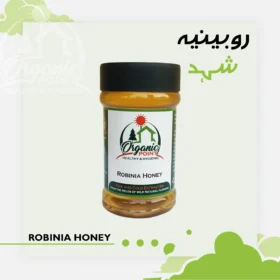
Robinia Honey
Price range: ₨ 1,800 through ₨ 3,400 Free Shipping
Robinia Honey is creamy and smooth in texture, having a light golden complex. It is delicious, pleasant and mild in sweetness. Each time you purchase with Organic Point, it is pure and tasty.
- Satisfactory Product
- Money Back Guarantee
- Secure Payments
- Home Delivery
Description
Natural Robinia Honey (روبینیا شہد)
100% pure raw Robinia honey from wild Black Locust (Robinia pseudoacacia) trees in Ghizer Valley, Gilgit-Baltistan, Pakistan. Cold-extracted, unfiltered, naturally high in fructose.
Product Specifications
| Attribute | Details |
|---|---|
| Botanical Source | Wild Robinia pseudoacacia (Black Locust / False Acacia) flowers |
| Origin | Ghizer Valley, Gilgit-Baltistan, Pakistan |
| Harvest Season | April–May (7-day bloom window annually) |
| Color | Water-white to pale golden (varies by harvest) |
| Texture | Smooth, liquid, slow-dripping viscosity |
| Taste | Delicately sweet with mild floral and vanilla notes |
| Processing | Raw, cold-extracted (<40°C), unfiltered |
| Crystallization Resistance | Stays liquid 2–4 years due to high F/G ratio (1.3:1) |
| Glycemic Index (GI) | ~32 (low, suitable for diabetics in moderation) |
| Shelf Life | Indefinite when stored correctly |
Why Robinia Honey Is Premium
At Organic Point Store Robinia honey is rare, because Black Locust trees bloom for only 7 days each spring. Weather conditions during this narrow window determine whether bees can collect nectar. Some years yield no harvest at all. Its exceptionally high fructose-to-glucose ratio (1.3:1) keeps it liquid for years without crystallizing, unlike most honeys that solidify within months.
Health Benefits
- Low glycemic index: Slower blood sugar spike than table sugar; suitable for diabetics in controlled amounts (consult doctor)
- Digestive support: Soothes mild stomach discomfort and acid reflux
- Respiratory relief: Eases coughs and sore throats naturally
- Antimicrobial properties: Inhibits bacterial growth in vitro
- Anti-inflammatory: Contains phenolic compounds that may reduce inflammation
- Gentle energy source: High fructose provides sustained energy without insulin spike
- Skin-friendly: Apply topically for minor cuts, burns, or dry skin
- Mild flavor: Ideal for those who find darker honeys too strong
How to Use Robinia Honey
Daily Dosage by Age:
- Infants (6–12 months): ½ teaspoon (2.5mL) — only if cleared by pediatrician
- Children (1–5 years): 1 teaspoon (5mL) per day
- Children (6–12 years): 2 teaspoons (10mL) per day
- Adults: 1–2 tablespoons (15–30mL) per day
Best Uses:
- Morning routine: 1 tablespoon on empty stomach with warm water (not hot — never exceed 40°C)
- Beverages: Stir into lukewarm tea, lemon water, or milk (add after cooling)
- Spread: Drizzle over toast, yogurt, pancakes, or fruit
- Baking substitute: Replace sugar in no-bake recipes (do not heat above 40°C)
- Skincare: Apply thin layer to minor cuts or dry patches; leave 15–20 minutes before rinsing
❌ Avoid cooking or baking with Robinia honey — heat above 40°C destroys enzymes and converts natural sugars into harmful compounds.
How to Authenticate Pure Robinia Honey
Visual & Sensory Tests (At Home):
- Color: Water-white to pale golden; reject if dark amber or brown
- Clarity: Slightly cloudy (pollen present); reject if perfectly clear (filtered/heated)
- Pour test: Slow, syrupy drip; settles in ribbons; reject if watery
- Taste: Mild, delicately sweet, floral with vanilla notes; reject if sharp, sour, or bitter
- Smell: Light floral aroma; reject if caramel-like (heated) or fermented (sour)
Lab Tests (Professional Verification):
- F/G ratio: Should be 1.2–1.4 (higher fructose keeps it liquid)
- HMF test: <10 mg/kg (confirms no heating)
- Moisture content: <18% (prevents fermentation)
- Pollen analysis: Confirms Robinia pseudoacacia dominance


Reviews
There are no reviews yet.